
Well water treatment in Clark County, WA.
Iron stains, rotten-egg smell, sediment, hardness, bacteria. All fixable, but only if the system matches the water. Every well job starts with a free full test, then a number in writing. Battle Ground, Brush Prairie, Hockinson, Ridgefield, La Center and rural Camas and Washougal.
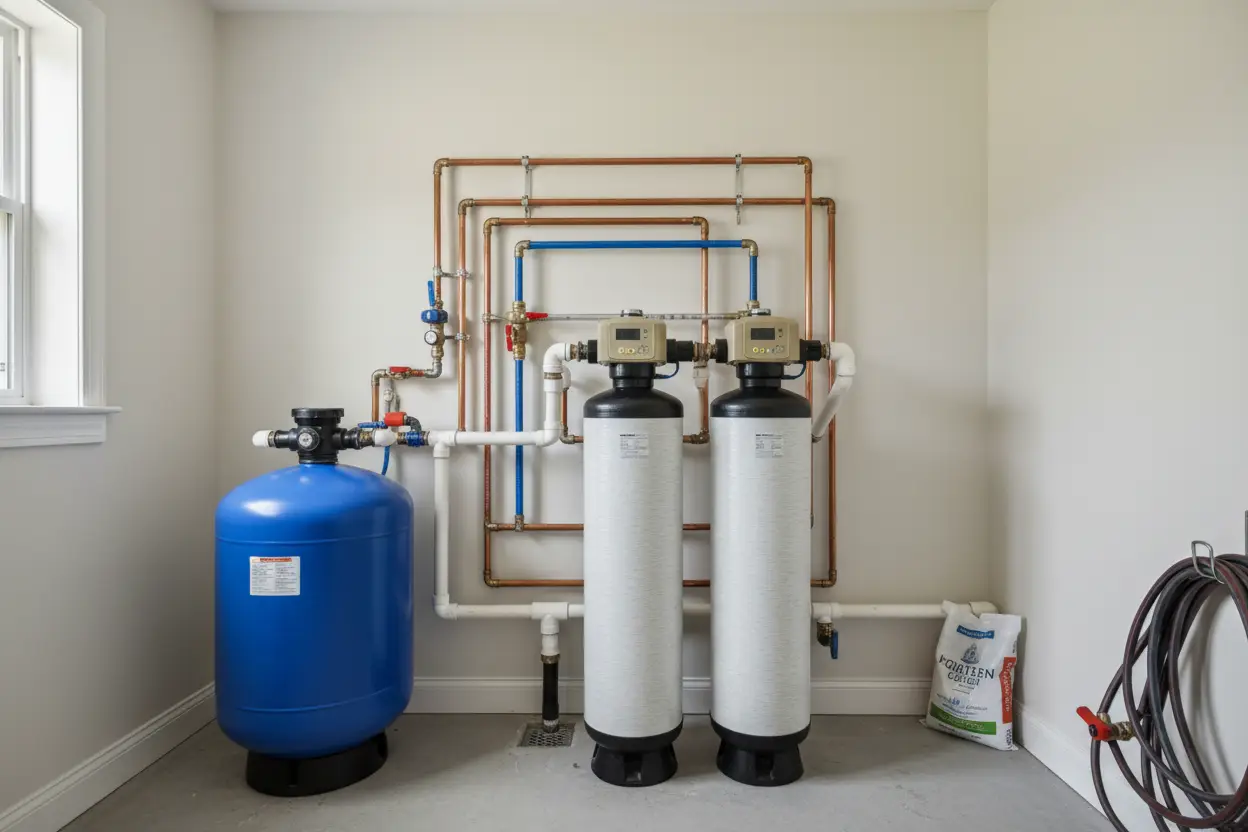
Installed and all-in.
- Free full well test — iron, hardness, hydrogen sulfide, sediment, pH and total dissolved solids
- Built to the numbers — sediment prefilter, iron and sulfur filtration, softening, UV and RO only where the test calls for them
- Installed in the right order — so each stage protects the next and nothing exhausts early
- Simple maintenance — salt, scheduled filter changes and a backwash check, with reminders from us
- NSF-certified components — lifetime equipment warranty, registered in writing
Two wells a quarter-mile apart can test wildly differently.
City water arrives pre-treated and consistent. Your well delivers whatever the aquifer under your property holds. That's why anyone quoting a well system without a full test is guessing with your money.
- Iron. Orange-brown stains in toilets, tubs and laundry. Dissolved and particulate iron need different treatment, so we test rather than guess.
- Hydrogen sulfide. The rotten-egg smell, worst on hot water first thing in the morning. Harmless at typical levels, miserable to live with, and very common around Battle Ground and Brush Prairie.
- Sediment. Sand and grit that wears down fixtures, valves and appliances. A prefilter is cheap insurance.
- Hardness. Well water here often tests harder than city water, so everything in our hard water guide applies double.
- Bacteria and pH. Less common, more important. Coliform calls for UV treatment; acidic water quietly eats copper plumbing.
Well country, by the numbers
- Battle Ground runs eight city wells and 71 miles of water line inside the city limits. Step outside them and it's almost entirely private wells.
- Brush Prairie and Hockinson are unincorporated and mostly on private wells. We never quote out here without a full well test first.
- Ridgefield pumps from six city wells and runs a filter plant to remove minerals like iron and manganese, a hint at what the local groundwater carries. Its 2025 PFAS tests came back clean.
- PFAS on a private well: it takes a certified lab. Clark County Public Health puts the cost at roughly $300–$600, and the state publishes a map of detections so you can check your area before paying for a test.
Sources: City of Battle Ground · City of Ridgefield · Clark County Public Health · Our well water guide
Treatment works. Guessing doesn't.
Big-box stores and some dealers sell a standard "well package," usually a softener with an extra cartridge. If your problem is mild hardness, fine. If you have dissolved iron and sulfur smell, that package will be exhausted in months and you'll conclude, wrongly, that treatment doesn't work.
Sediment prefilter
Catches sand and grit before it reaches anything expensive.
Iron and sulfur filtration
Sized to the concentration on your test. This is the piece the kits get wrong.
Softener, UV, RO
Softening for hardness, UV only if bacteria risk shows up, and RO at the sink for drinking-water polish.
From first call to clean well water in three steps.
Call and tell us what you're seeing
Stains, smell, sediment, low pressure. We'll ask a few questions and book the free test.
Free full well test
Iron, hardness, hydrogen sulfide, sediment, pH and TDS. If your well tests fine, we'll shake your hand and leave.
Exact price in writing, then install
A system built to your numbers, installed in the right order, with a maintenance schedule you can actually keep.
Frequently asked questions
How much does a well water treatment system cost?
My well water smells like rotten eggs. Fixable?
Do you test for bacteria?
Can I add a softener to my well system?
How much maintenance is a treated well?
Clean well water starts with a real test.
Free, in your driveway, usually this week. Then an exact price in writing.
Well water treatment across the county: