
Whole-home water filtration in Vancouver, WA.
Catalytic carbon filtration installed where the water enters your home, so every tap, shower and appliance gets water without the chlorine taste, the pool smell or the disinfection byproducts. Free test, written quote by phone, lifetime warranty.
Installed and all-in.
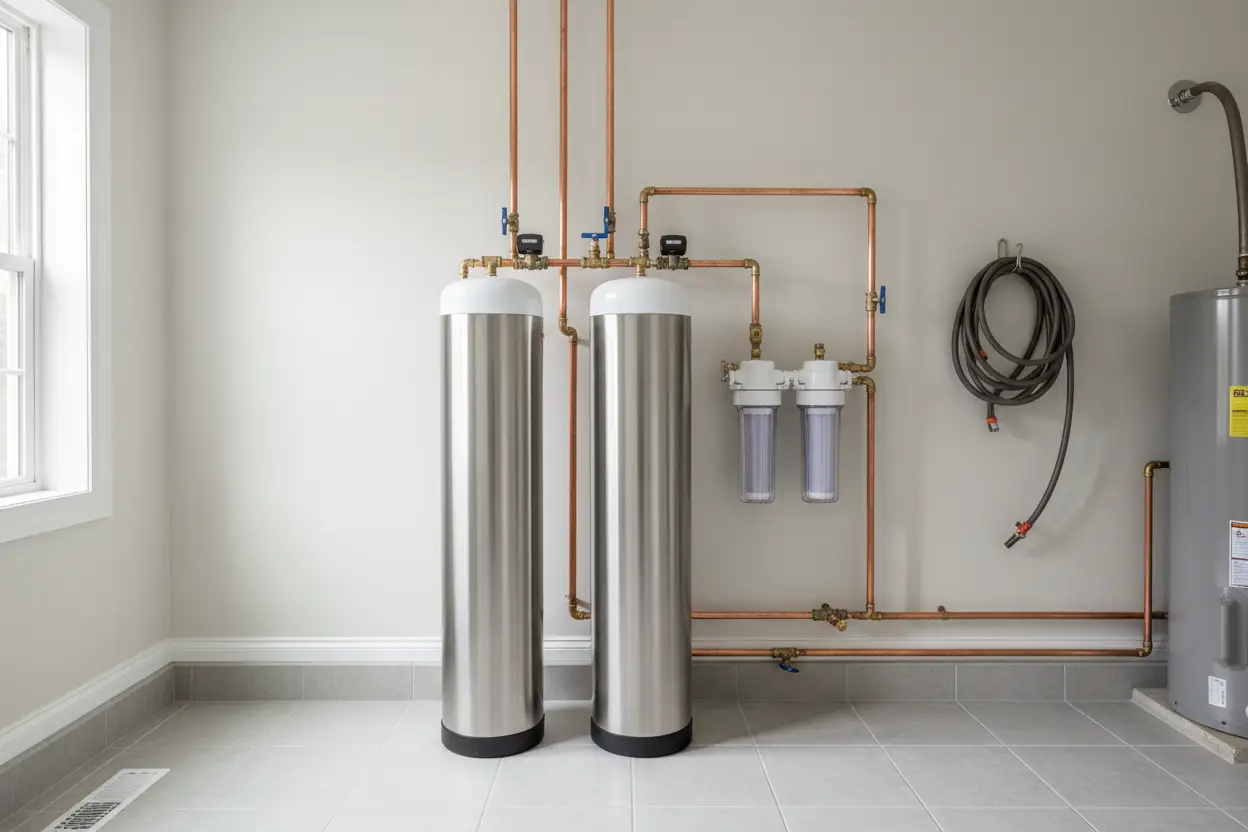
- Whole-home catalytic carbon tank — sized to your home's flow rate and bathroom count, not a cartridge that clogs
- Sediment prefilter where the test calls for it — cheap insurance for valves and appliances
- NSF-certified media — removes chlorine, chloramine, taste, odor and disinfection byproducts
- Protects your softener — carbon upstream keeps chlorine off the softener resin so it lasts longer
- Lifetime equipment warranty — registered in writing before we leave
Keep the safety. Skip the pool taste.
Chlorine is what keeps city water safe between the treatment plant and your house. That's good engineering. Once it reaches your home, its job is done, and carbon takes it out.
- Tap water that tastes like a pool. Carbon adsorbs chlorine and chloramine along with the tastes and odors they cause.
- Showers that dry out skin and hair. Chlorine is drying. Most people notice the difference in the first week.
- Disinfection byproducts. As chlorine works it forms compounds like trihalomethanes that regulators limit and most people would rather minimize.
- Coffee and cooking that taste off. Whole-home carbon fixes every tap, not just one.
- Sediment. A prefilter catches grit before it wears down fixtures and appliance valves.
What it does not do: remove hardness. That's the softener's job, which is why the two are usually installed together as The Whole Home.
What's in Clark County city water?
- Vancouver disinfects with chlorine (0.4–1.3 ppm in the 2025 report) and adds fluoride. All of its water comes from wells in three local aquifers.
- Clark Public Utilities adds only a trace of chlorine and no fluoride, and reports no lead in its distribution system.
- Camas treats its well water with chlorine, fluoride and sodium hydroxide to protect copper pipes from corrosion.
- PFAS: the City of Vancouver is installing granular activated carbon at Water Station 14 starting in 2026 to bring PFAS under federal limits. A home carbon system reduces some PFAS too, but the tap-level answer is reverse osmosis.
Sources: City of Vancouver 2025 report · Clark Public Utilities · Our PFAS guide
Carbon is the middle piece of the system.
Rule of thumb: softener = the house, carbon = the taps, reverse osmosis = the glass. Carbon filtration is built into The Whole Home and The Complete System.
Carbon first
Takes out chlorine before it can wear down the softener resin, and fixes taste and odor at every tap.
Softener second
Removes hardness to protect the water heater, fixtures and everything downstream. Water softeners →
RO at the sink
Starts with already-filtered, already-softened water, so its membrane lasts longer. Reverse osmosis →
From first call to better water in three steps.
Get your price
Call, text, or send the form. You'll have an exact, all-in price in writing within minutes. No home visit needed.
Free water test
Before install we test your tap water for hardness, chlorine, iron, TDS and pH, and size the system to match. If you don't need us, we'll say so.
Installed, usually same week
About half a day. Warranty registered, everything walked through, old equipment hauled away.
Frequently asked questions
What's the difference between a water filter and a water softener?
Does whole-home carbon filtration remove PFAS?
How much maintenance does it need?
I'm on a well. Is this the right filter?
How much does a whole-house filtration system cost?
Better water at every tap.
One quick call gets you this month's price in writing. No visit, no pitch, no pressure.
Also see: